Motiva Preservé is a branded breast augmentation technique developed by breast implant manufacturer Establishment Labs. It has attracted attention through claims of tissue preservation, smaller incisions and faster recovery.
The technique involves creating the breast implant pocket using blunt tissue separation and balloon expansion, rather than conventional surgical dissection under direct vision. It is promoted as a less invasive alternative to established breast augmentation techniques.
However, tissue preservation is not a new concept in breast surgery. Protecting natural anatomical structures, minimising unnecessary tissue disruption and selecting appropriately sized implants have long been fundamental principles of meticulous breast augmentation.
As a specialist cosmetic breast surgeon with more than 22 years of consultant experience, I believe it is important to look beyond the marketing and examine how Preservé works, what evidence supports its claimed benefits and how it compares with established surgical approaches.
How is Preservé described as working?
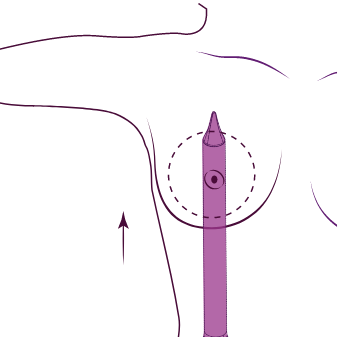
A blunt plastic separator is inserted through an incision to create a channel within the breast tissues. An inflatable balloon is then passed through this channel and expanded to form the implant pocket. The balloon is removed, and the implant is inserted using a plastic insertion sleeve.
An important feature, and potential limitation, of this technique is that much of the pocket creation takes place without the surgeon directly seeing the tissues being separated. Rather than using instruments to dissect under continuous direct vision, the pocket is developed through the mechanical action of the blunt separator and expanding balloon.
Although Motiva describes this as a tissue-preserving approach, the fact that tissues are separated by blunt instruments and balloon expansion does not, in itself, establish that they experience less injury than with carefully controlled surgical dissection.
What does “tissue-preserving” mean?
The term “tissue-preserving” sounds reassuring, but does it accurately describe what happens during Motiva Preservé breast augmentation?
Creating a pocket for a breast implant inevitably involves disrupting the natural connections between tissues. In Preservé, this is achieved by forcing apart tissue planes through blunt mechanical separation and balloon expansion, largely without direct visualisation.
There is nothing inherently tissue-preserving about using a blunt instrument or inflatable balloon to separate tissues. Indeed, without directly seeing the tissues being separated, the surgeon has limited ability to identify precisely which structures are being stretched, disrupted or damaged during pocket creation.
Balloon dissection is not a new surgical concept. Similar methods were used decades ago in vascular surgery, including subfascial endoscopic perforator surgery (SEPS), where a balloon was used to create a working space beneath the fascia of the leg. SEPS subsequently fell largely out of routine use as alternative treatments became established, although this was not specifically because of balloon dissection. Its history demonstrates that using an inflatable balloon to separate tissues is neither a new surgical principle nor, in itself, evidence of an advance in surgical technique.
Genuine tissue preservation requires careful consideration of the anatomical structures being protected and the extent of tissue disruption involved. It should be demonstrated by clinical evidence, not assumed from the name or marketing of a procedure.
Until convincing comparative evidence demonstrates that Preservé causes less tissue injury or achieves better clinical outcomes, claims of superior tissue preservation should be regarded as unproven.
What benefits does Motiva claim for Preservé?
Motiva markets Preservé with claims of reduced tissue damage, better preservation of breast support and sensation, smaller scars and faster recovery.
These are appealing claims, but they should not be confused with independently demonstrated improvements in surgical outcomes.
Published studies have reported early clinical outcomes following balloon-assisted breast augmentation. However, much of the evidence relates to selected patients, relatively limited follow-up or studies involving clinicians associated with the development and use of these techniques.
Crucially, although early clinical studies of the technique have been published, robust independent comparative evidence has not yet established that Preservé causes less tissue injury, provides better long-term breast support or reduces complications compared with meticulous breast augmentation performed under direct vision.
It is also important to distinguish evidence concerning Motiva breast implants from evidence concerning the Preservé surgical technique. The performance of an implant does not establish the superiority of the method used to insert it.
In my view, claims of improved tissue preservation, safety or recovery should be supported by convincing clinical evidence rather than assumed from the manufacturer’s descriptions of the procedure.
Can Preservé be performed under local anaesthetic?
Preservé is promoted as a technique that can be performed under local anaesthesia, sometimes with sedation.
However, avoiding general anaesthesia is not necessarily an advantage for every patient. Local anaesthesia does not make an operation inherently safer, less traumatic or more suitable.
In my own practice, I favour general anaesthesia for breast augmentation. It provides a controlled operating environment, optimal patient comfort and appropriate conditions for meticulous surgical dissection and implant placement.
The choice of anaesthetic should be based on the patient’s individual circumstances and the requirements of the operation, rather than being used as a selling point for a particular technique.
Is recovery faster?
Faster recovery is one of the main benefits promoted for Motiva Preservé. However, it is important to understand that Preservé is a prepectoral breast augmentation technique, meaning the implant is placed in front of the pectoralis muscle.
Prepectoral (subglandular) breast augmentation is not new or exclusive to Motiva. It has been an established surgical approach for decades and can be performed using meticulous dissection under direct vision, without the need for blunt balloon expansion.
Because prepectoral augmentation avoids the additional muscular dissection associated with subpectoral implant placement, recovery is often relatively rapid, regardless of whether the implant pocket is created using Preservé or conventional surgical techniques.
It would therefore be misleading to attribute the benefits of prepectoral implant placement specifically to Preservé, or to compare its recovery with that of conventional subpectoral augmentation as though the two procedures were directly equivalent.
In my experience, patients undergoing conventional subglandular augmentation with appropriately sized implants and carefully controlled dissection under direct vision generally achieve a similarly rapid recovery. This approach also allows me to identify and control bleeding vessels as they are encountered, assess the tissues directly and develop the implant pocket under continuous visual control.
There is currently insufficient robust comparative evidence to establish that Preservé provides a meaningful recovery advantage over conventional prepectoral breast augmentation performed under direct vision.
Who might be suitable for Preservé?
The choice of implant position is fundamental to breast augmentation planning, and the same approach is not appropriate for every woman.
Motiva Preservé uses blunt tissue separation and balloon expansion to create an implant pocket in front of the pectoralis muscle. It does not provide a method of performing subpectoral or dual-plane augmentation, where controlled dissection and appropriate release of the pectoralis muscle are required.
Subfascial augmentation presents a further consideration. Developing a precise pocket beneath the relatively thin pectoral fascia requires careful identification of the correct tissue plane. In my view, this is better achieved through controlled dissection under direct vision than through non-visualised blunt separation and balloon expansion.
For women with limited natural breast tissue coverage, subpectoral or dual-plane implant placement may offer better coverage and reduce the risk of visible or palpable implant edges. Women with significant breast sagging may instead require a breast uplift, either alone or combined with augmentation.
Existing asymmetry, skin quality, tissue thickness and implant dimensions must also be considered when deciding on the most appropriate operation.
In my practice, I assess these factors carefully before recommending an implant size, position and surgical approach. I do not believe that a branded method of pocket creation should restrict the choice of surgical technique or compromise the anatomical requirements of the patient.
The patient’s anatomy should determine the operation, rather than attempting to make every patient fit a particular branded technique.
How does it compare with other breast augmentation techniques?
In my practice, I favour meticulous surgical dissection under direct vision. This allows me to identify anatomical structures, assess the tissue planes being separated, recognise and control bleeding vessels as they are encountered, and make adjustments to the implant pocket throughout the operation.
My principal concern with Preservé is that much of its blunt mechanical separation and balloon expansion takes place without direct visualisation. The surgeon cannot continuously observe which tissues are being separated or immediately identify and address individual bleeding points under direct vision.
I do not regard this reduction in direct visual control as a surgical advantage. It runs counter to my preference for precise, anatomically controlled dissection, where the tissues can be assessed and surgical decisions adjusted throughout the operation.
This does not establish that Preservé is inherently unsafe or that satisfactory results cannot be achieved using it. However, I believe meaningful clinical advantages should be demonstrated through robust independent comparative evidence before reduced visual control is accepted as a worthwhile trade-off.
For these reasons, I do not offer Motiva Preservé. I continue to favour breast augmentation performed under direct vision, with careful attention to tissue preservation, haemostasis, implant positioning and long-term breast shape.
Patients can read more about the breast augmentation techniques I offer in my general breast augmentation guide.
Questions to ask at consultation
- Which breast augmentation approach is most appropriate for my anatomy?
- Should my implant be placed above or below the pectoralis muscle, and why?
- How will the implant pocket be created, and will the surgeon be able to see the tissues being dissected?
- What independent evidence supports the claimed advantages of newer branded techniques?
- What are the potential complications, including bleeding, infection, implant malposition and capsular contracture?
- What are the realistic expectations for recovery and returning to exercise?
- What postoperative care and long-term follow-up will be provided?
Discuss breast augmentation with Philip Turton
Choosing the right breast augmentation technique requires careful assessment of your anatomy, tissue characteristics and individual goals, rather than simply selecting a particular implant brand or marketed procedure.
With more than 22 years of consultant specialist experience, I provide an individual approach to breast augmentation, placing particular emphasis on meticulous surgical technique, appropriate implant selection and achieving natural, proportionate results.
My surgical practice is dedicated exclusively to breast surgery. I offer consultations at Nuffield Health Leeds Hospital, where 3D breast imaging is available to assist with implant selection and surgical planning.
If you are considering breast augmentation and would like an experienced, independent assessment of the options suitable for you, you are welcome to arrange a consultation.
Book a consultation with Philip Turton to discuss breast augmentation options.