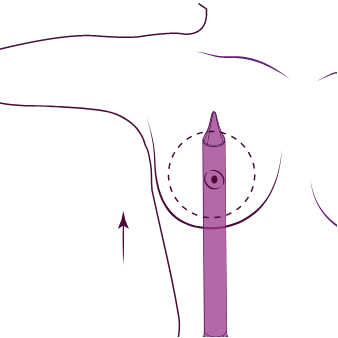
When researching breast augmentation, you may come across the phrase “breast tissue preservation”. It describes a principle of considering how the breast’s natural tissues and supporting structures are handled during surgery. It is not, by itself, the name of one specific operation or a guarantee of a particular result.
Different surgical techniques are designed around different patient needs, anatomy and clinical considerations. The appropriate approach depends on an individual assessment, including breast shape, tissue characteristics, implant choice, desired outcome and medical history.
What does breast tissue preservation mean?
Breast tissue preservation generally means planning and performing surgery with consideration for the patient’s existing breast tissue and surrounding structures. During breast augmentation, the surgeon creates space for an implant while taking account of the skin, glandular and fatty tissue, connective tissue, blood supply and supporting structures.
The steps used to create the implant pocket vary by technique. No operation is entirely without tissue disruption: surgery involves an incision and changes to the tissues to accommodate the implant. The important questions are how a particular approach manages those tissues, what evidence supports its proposed benefits, and whether it is suitable for the individual patient.
Understanding the breast’s supporting structures
Breast shape and support reflect several factors, including skin, fatty and glandular tissue, connective-tissue structures, natural breast volume, skin quality, age, pregnancy and changes in weight. The pectoral muscle lies beneath the breast and is relevant to some implant-placement approaches.
These structures are important considerations, but it would be misleading to suggest that every established breast augmentation technique necessarily destroys the breast’s support structures. The details depend on the procedure, the patient’s anatomy and the surgeon’s technique.
How do breast augmentation techniques differ?
Techniques can differ in incision location, how the implant pocket is created, whether the implant is placed above or partly beneath the pectoral muscle, the implant selected and the instruments used. Each approach has its own considerations, potential benefits, limitations and risks.
Neither implant position nor one named technique is automatically right for every patient. A surgeon will consider natural tissue coverage, chest and breast anatomy, desired outcome, health and lifestyle, as well as the evidence and risks associated with each suitable option.
What is Motiva Preservé?
Preservé is a branded breast augmentation technique promoted by Motiva. It uses a manufacturer-supplied, single use instrument system to blindly and bluntly create a space for implant insertion, rather than conventional precise surgical dissection under direct vision.
The manufacturer promotes the technique as a means of reducing tissue disruption, with associated claims concerning recovery, scarring, sensation and breast support. These proposed benefits should not be assumed to represent established clinical advantages over conventional breast augmentation techniques.
Tissue preservation is not unique to Preservé. It is an established principle of breast augmentation surgery, including techniques that allow careful tissue handling and controlled dissection under direct vision. The use of a branded instrument system does not, in itself, establish greater precision, safety or tissue preservation.
Patients considering Preservé should discuss its suitability, anaesthetic arrangements, potential limitations and the quality of independent evidence supporting it’s short- and longer-term outcomes with an appropriately qualified surgeon.
See our separate guide to Motiva Preservé for more detail.
Does tissue preservation mean other techniques damage tissue?
No single phrase can fairly describe every surgical technique. Breast augmentation involves an incision and creating space for an implant, but techniques differ in how this is done. It is not accurate to assume that all approaches other than a branded tissue-preservation technique are inherently tissue-destroying.
When comparing options, ask the surgeon to explain the specific tissues affected, the intended implant position, the evidence behind claims about recovery or sensation, and the potential risks and trade-offs for your anatomy.
Recovery, sensation and potential risks
Recovery varies between individuals and depends on the operation performed, implant and pocket selected, the patient’s health, and the work and activities they need to resume. A technique described as less invasive should not be interpreted as risk-free or as a promise of immediate return to normal activities.
Potential risks of breast augmentation can include bleeding, infection, scarring, changes in nipple or breast sensation, asymmetry, implant malposition, capsular contracture, implant rupture and further surgery. The specific risks and their likelihood should be discussed with the surgeon as part of informed consent.
Ask for personalised guidance on driving, work, exercise, lifting and other activities, and follow the post-operative advice you are given.
Which technique is right for me?
There is no single breast augmentation technique that is best for everyone. The decision should follow a consultation and examination, with discussion of your goals, breast anatomy, implant options, medical history and the risks and limitations of each suitable approach.
A useful consultation should leave you understanding why a particular technique is being recommended, what alternatives are available, what the evidence can and cannot tell us, and what recovery is likely to involve in your circumstances.
Questions to ask your breast surgeon
- What implant position and pocket-creation technique do you recommend for my anatomy, and why?
- Which tissues and supporting structures are affected by the proposed operation?
- What evidence supports the expected benefits and longer-term outcomes?
- What are the risks, limitations and alternatives?
- What should I expect during recovery, and when can I return to work, driving and exercise?
- Do you offer the specific technique I have seen advertised, and am I a suitable candidate?
Discuss your options with Philip Turton
If you are considering breast augmentation, a consultation can help you understand the options relevant to your anatomy and goals. The aim is to make an informed decision based on a clinical assessment, a clear explanation of alternatives and realistic expectations.
Book a consultation to discuss breast augmentation and the techniques that may be appropriate for you.