
Capsular Contraction
Capsular contracture is a condition that can occur after breast augmentation, where scar tissue naturally forms around an implant and begins to tighten or harden. This can affect the shape, feel, and comfort of the breast and, in some cases, may lead to visible distortion or discomfort.
In Leeds, treatment is carried out by Consultant Oncoplastic Breast Surgeon Mr Philip Turton, who has extensive experience in both primary and revision breast surgery, including the management of capsular contracture. His approach focuses on accurately diagnosing the severity of the condition and recommending tailored surgical solutions such as capsulectomy or implant exchange to restore a natural breast shape and feel.

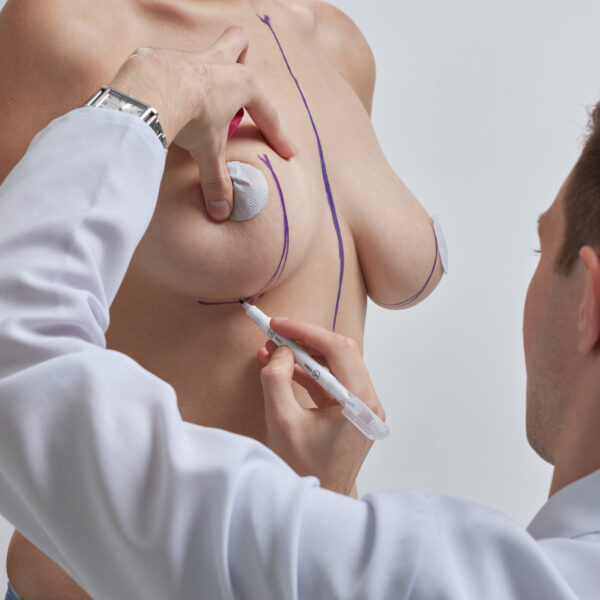
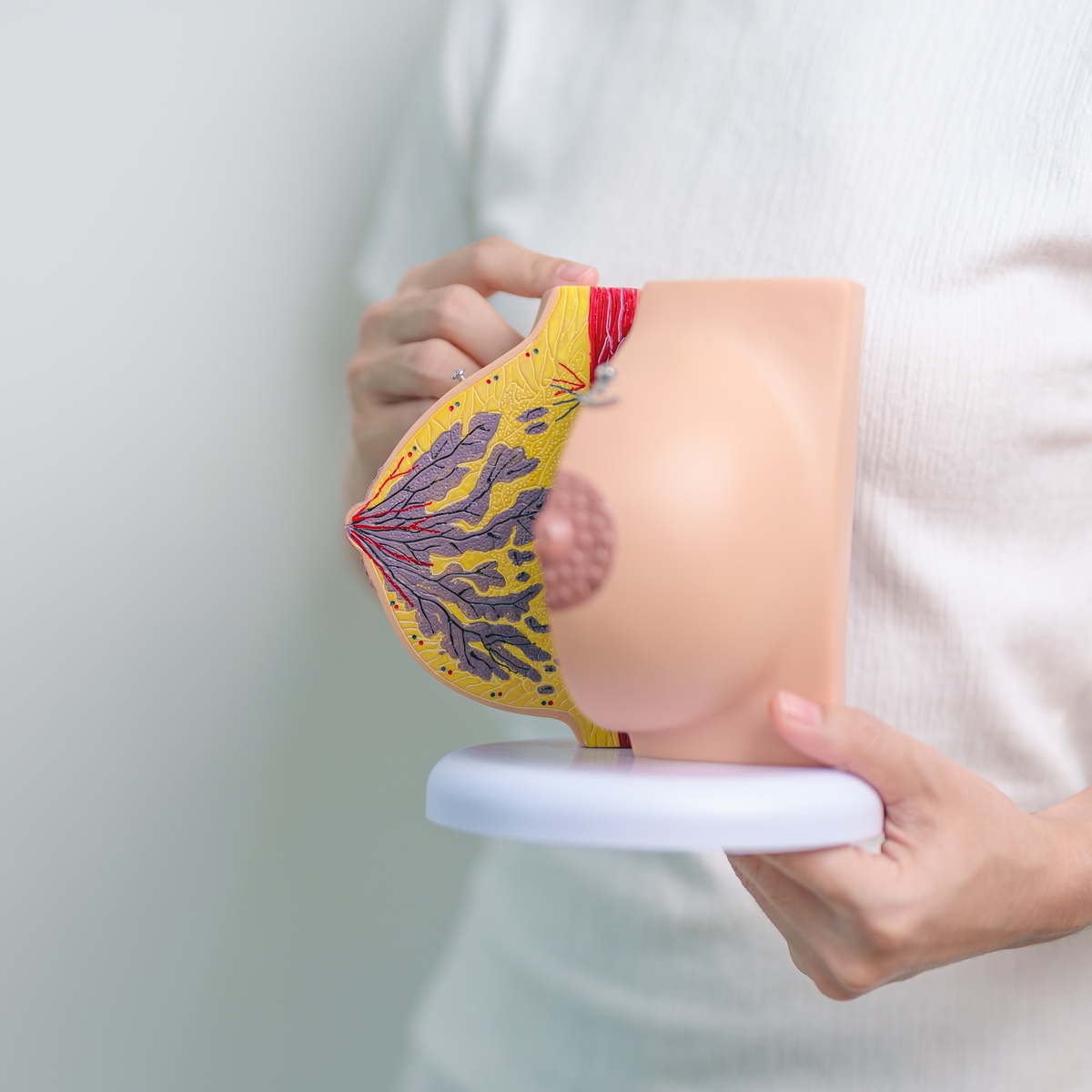
Understanding Capsular Contraction
Capsular contracture occurs when the capsule of fibrous tissue surrounding the breast implant thickens or tightens.
This condition can happen at any time but is most common within the first few months after surgery or several years later.
The capsule, which initially forms to support the implant and create a natural feel, may shrink in some individuals. This shrinkage can result in increased firmness of the implant and, in severe cases, discomfort or pain. Over time, the implant may feel overly firm or develop small angulated edges called knuckles or simply an unnatural appearance.
Philip Turton, a leading oncoplastic surgeon based in Leeds, is here to help you navigate the nuances of breast augmentation and any complications that may arise, including capsular contracture.
How Capsular Contracture Occurs
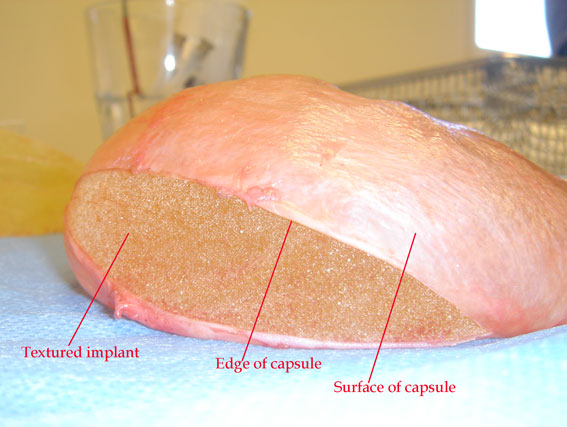
During breast augmentation surgery, a pocket is created under the breast to house the implant. As the body heals, it produces a thin fibrous scar tissue layer that forms the complete capsule around the implant.
When heavily textured (rough surface) breast implants were previously used it was because the manufacturer felt this would reduce capsular contracture by disrupting the collagen in the scar tissue from pulling tighter.
And the capsule would often integrate like velcro onto the textured surface making it feel like one with the beast, and reducing malposition.
The less textured implants or the smooth (no texture) surface implants in use in this day and age, do not adhere to the scar tissue at all.
For some individuals, this tissue called the capsule, thickens excessively, or simply contracts without thickening, around the implant.
Capsular contracture can result in varying degrees of firmness and visual alteration. In severe cases, the condition may cause the breast to feel hard, appear misshapen, or develop a spherical “ball-like” look. This tightening of the capsule is graded to determine the severity.
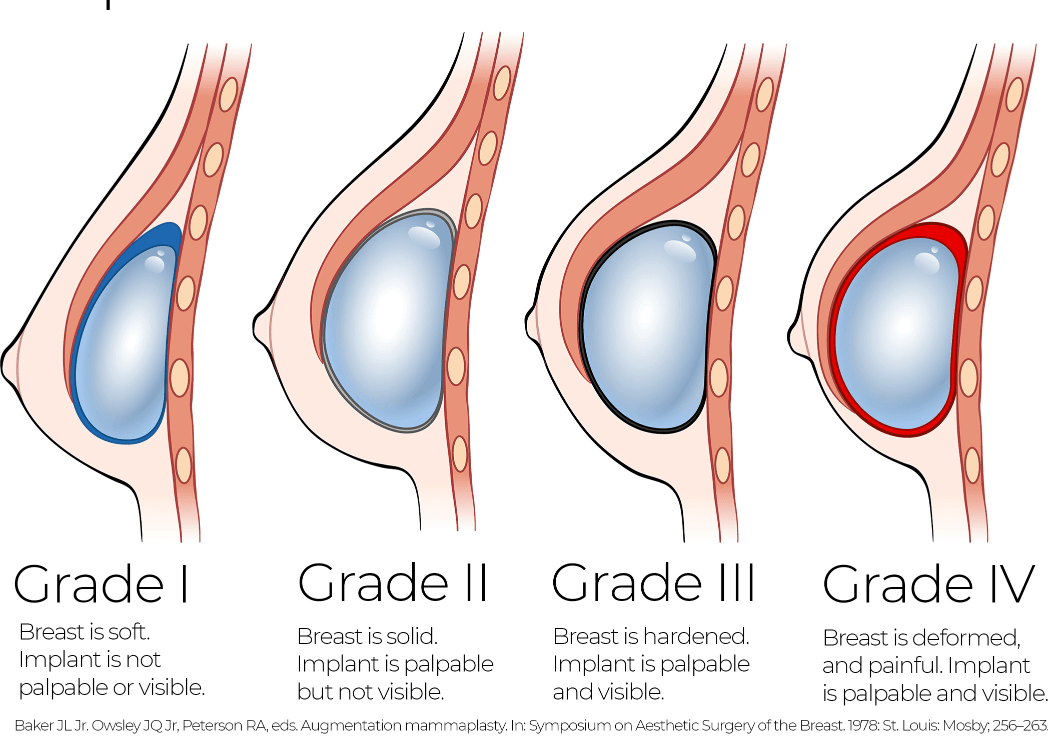
Grading Capsular Contracture
There are probably several causes that affect some patients and not others. There are some factors that may increase the risk of capsular contracture.
Smoking
The rate of capsular contraction is twice as high in smokers or people using vape. Mr Turton advises all of his patients not to do this.
Infection
Capsular contracture is more likely following an infection. It may occur following subclinical infection. Subclinical mastitis with pregnancy or breast feeding may precede it. Dental infection, gingivitis, abscess or dental treatment like a root canal.
Haematoma
This is a collection of blood around the implant. It could cause an inflammatory reaction, which could theoretically predispose to capsular contracture.
Smooth Surface Implants
The smooth surface implants seem to be associated with a significantly higher capsulation rate than the rough surface type if placed in the sub-glandular position. The rates are otherwise similar if placed sub-pectorally.
Ruptured or Leaking Implant
A ruptured implant or one that is bleeding small amounts of gel into the area around the implant might incite a chronic inflammatory response that leads to your capsule tightening around the implant.
Other Autoimmune
Other autoimmune, inflammatory or chronic inflammatory conditions in the body that are not well researched; these may increase problems with implants, including capsular contraction.

How does Mr. Turton treat capsular contraction of breast implants?
The first advice is permanently to stop smoking if you are a smoker.
If there are no symptoms and the cosmetic result remains excellent you do not need to have anything done.
It doesn’t always progress. It is also important to know that it is not necessarily associated with any implant rupture. It is also not commonly associated with any unrecognised toxic or nasty systemic inflammatory process, or an implant lymphoma. In other words, capsular contracture, for most patients, is a benign process.
If it causes discomfort, pain or an unwanted cosmetic result then a careful clinical review with a specialist is required. You may need breast imaging to check the implant (silicone sequence breast MRI). Surgery is then the best way to deal with it.
No one should undergo the previously used but now out-dated technique of closed capsulotomy (the hardened implant was manually squeezed from the outside, to tear the scar envelope, but this could damage the implant, rupturing it).
Open capsulotomy, partial or full capsulectomy (e.g. total en-bloc capsulectomy): This involves a general anaesthetic. The previous incision is usually reopened and lengthened to improve access.
The capsule is either incised if it is very minor. But otherwise Mr Turton would look at partial, sub-total, or totally excising the capsule depending on likely cause, circumstance, technical possibility and safety. Either total en-bloc or after removal of the implant depending on reasons. Mr Turton is extremely experienced in these judgements and all of these techniques.
Of particular relevance is how the breast may be more flaccid, looser and lower are capsulectomy. Therefore, because a lot of patients do not want more breast droop, Mr Turton has a special technique called Explantation and mastopexy, in which he can usually remove the capsule simultaneously with breast reshaping- but, it is better not to replace the implant for at least 6-months.
Some patients have such a good shape after this (if they have reasonable breast volume) that they are happy to stay implant free! Patients can usually decide after 3-months, and if happy can spare themselves the cost of a second operation, and spare themselves of future implant problems too.
Capsular Contracture FAQ
Capsular contracture is a complication of breast implant surgery where the scar tissue (capsule) that naturally forms around an implant tightens and hardens, potentially affecting breast shape, softness, and comfort.
The exact cause is not always known, but it may be linked to inflammation, infection, bleeding around the implant, or the body’s natural healing response. It can occur in one or both breasts.
Symptoms may include breast firmness, tightness, distortion in shape, asymmetry, or discomfort. In more severe cases, the breast may feel hard or appear visibly misshapen.
Treatment typically involves surgery, which may include removal of the scar tissue (capsulectomy), implant replacement, or implant removal. The best approach depends on the severity and patient preference.
Yes, there is a possibility of recurrence, particularly if implants are replaced. However, surgical techniques and implant selection can help reduce the risk.
Not all cases require surgery. Mild cases may be monitored, but moderate to severe contracture often requires surgical correction to restore comfort and breast shape.