
Choosing the perfect breast implant is more than aesthetics, it’s about safety, longevity, and aligning with your unique body shape and goals.
In 2025, with advances in expert surgery techniques combined with new implant types, implant profiling, and FDA-approved technologies, selecting the right breast prosthesis demands insight into science, experience, and reliable data.
This guide offers a comprehensive roadmap, weaving together body proportions (also called biodimensional assessment(, materials, surgical techniques, and recovery considerations so you can make a truly informed decision.
Understanding Implant Types and Materials
Before diving into size and shape, you need a clear grasp of the two primary implant types: silicone and saline– and their variations.
Implant type silicone
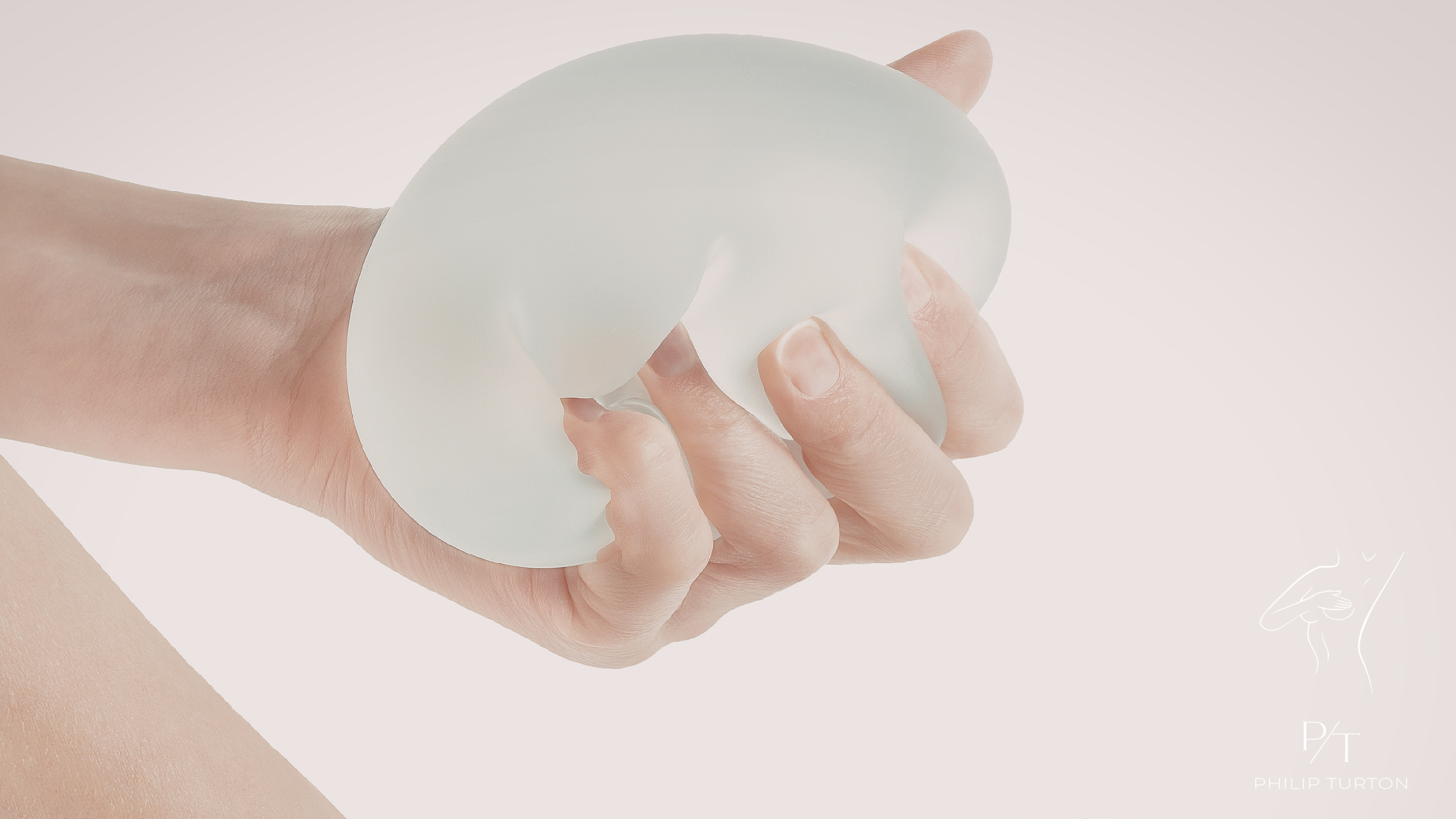
Silicone implants, filled with medical grade cohesive gel, have surged in popularity in the last two decades. They mimic firm natural breast tissue. The most modern varieties from Mentor, resist rippling, and feel softer. Late-generation gummy bear implants are form-stable and maintain shape, even for some time after the shell ruptures.
The benefit of silicone includes long-term aesthetic appeal and fewer contour irregularities compared to saline.
Implant type saline
Saline implants have a silicone shell outer layer, but are filled with sterile salt water. Salt water and saline are the same thing. They can be inserted empty (via smaller incisions) and filled during surgery via a small connecting tube. While generally firmer and more prone to rippling, they are safe in case of rupture- they just deflate instantly and saline is absorbed by the body. But, you now have one flat breast and one normal breast! The rupture/deflation may be higher than the rupture rate of their silicone counterparts.
Structured implants (IDEAL IMPLANT)
A hybrid solution, structured implants were created to combine silicone internal shells and little pockets of saline to offer a natural feel without gel bleed risks. These were FDA‑approved, and considered ideal for patients seeking balance between silicone-like feel and saline safety. But, and this is a big but: Ideal implants were discontinued in 2023. Perhaps a novel implant design, and some elements could be incorporated in future design changes from other manufacturers one day. For now, they are no longer available.
FDA Approval & Implant Longevity
Understanding FDA approval and long-term performance is critical.
- Silicone implants are FDA‑approved for augmentation in women ≥ 22 years; saline implants are approved ≥ 18 years.
- New cohesive gels (“fifth generation”) drastically reduce implant risks like rupture and leakage. But the risk is not zero!
- Implant longevity is estimated at 10-20 years, but many last longer with proper care; periodic imaging- notably MRI or ultrasound- is recommended.
- Uncommon cancer risks like BIA‑ALCL (anaplastic large‑cell lymphoma) remain low, but awareness and monitoring are vital.
Matching Implant Sizing and Profiling to Your Body
Size and projection determine aesthetic harmony and functional comfort. An expert surgeon is best at guiding the selection for you, based on your aesthetics, measurements and tissue characteristics.
Implant sizing: cc volume vs cup size
Implants are measured in cubic centimetres (cc). Typically:
- 150–200 cc ≈ one cup size
- Common mid‑range: 300–400 cc
- Range spans 100–800 cc+ depending on frame
Use 3D imaging (Crisalix is supported by expert breast surgeons who have invested in this state of the art technology), displacement techniques by your surgeon in clinic (in front of a mirror), or silicone sizers in a bra, and at‑home tools like the “rice test” for visualization.
Implant profile and projection
Profiles define how far implants sit from the chest wall:
- Low/moderate: natural look, wider base
- Moderate‑plus / high: more forward projection, narrower base
- Ultra‑high: dramatic projection
More projection is achievable with smaller cc in high-profile options.
Shape matters: round vs teardrop
- Round implants give uniform fullness and cleavage; rotation isn’t an issue. A correctly sized moderate profile implant can look almost identical to a teardrop implant in the right patient. It is the higher volumes and higher profile round implants that start to increase the upper breast to greater and greater degrees.
- Teardrop (anatomical) mimic a flat, natural slope; require textured surface and stable positioning. They can rotate and then need surgery to reposition or replace.
- Today’s high cohesive Xtragel and gummy bear implants offer both greater stability and natural form.
Incisions, Pocket Placement & Surgical Technique
A skilled breast cosmetic plastic surgeon, combined with the optimum breast implants and technique, influences both outcomes and recovery.
Implant incision options
- Inframammary (under fold): precise implant placement, hidden scars, typically fade beautifully
- Periareolar (around nipple): blended but may risk sensation changes, or risk contamination of the implant as you dissect through the bigger nipple ducts.
- Transaxillary (armpit) and TUBA (navel): minimal breast scarring; more technical, and higher malposition rate. Saline only. The armpit incision cuts through natural lymphatic pathways.
Pocket placement
- Subglandular (above muscle): shorter recovery, looks very natural; if the tissue is very thin, you have an increased rippling risk. Tissue thickness should always be assessed with tissue calipers by an expert breast surgeon.
- Submuscular/dual‑plane: better coverage when tissue is too thin for subglandular; natural drop-and-fluff effect; can cause animation with muscle contraction; more painful recovery; cannot reliably ever re-attach the muscle The gap between the breasts may be increased compared to sub-glandular placement.
- Subfascial: fascia layer adds tiny strands of coverage. In reality this is very limited.
Choice depends on tissue thickness, implant type, and lifestyle needs.
Balancing Aesthetics, Lifestyle & Safety
An implant’s appropriateness extends beyond beauty-it must also reflect the woman’s daily life and long-term health.
Matching body frame & chest wall
Consultation with a board-certified breast or plastic surgeon helps assess:
- Chest width & soft-tissue thickness (influence base diameter)
- Body frame: petite vs broad shoulders affect size choices
- Skin elasticity, breast tissue distensibility, and tissue support all shape final outcome
Lifestyle & postoperative recovery
- Active patients should avoid overly large implants to prevent shoulder, neck, or back strain. Large implants in sagging breasts can also be more uncomfortable.
- Implant longevity is tied in part to postoperative recovery, meaning following activity restrictions and wearing approved support garments.
- Breast implant cost correlates with type: silicone and gummy bear implants generally cost more due to advanced materials and longer shelf-life.
Mitigating Implant Risks
No implant is risk-free, but smart choices and vigilance reduce complications.
Common complications & prevention
- Capsular contracture: textured or submuscular placement reduces risk; sterility when placing the implants and early detection are key.
- Rippling: minimized with silicone, textured, or gummy bear implants under adequate soft tissue, otherwise choose under the muscle.
- Implant rupture: MRI or ultrasound screenings can catch silent leaks-especially with silicone and with implants older than 8-years Consider examination with an expert breast surgeon plus silicone-sequence-Breast-MRI imaging every 2 years.
Rare but serious risks
- BIA‑ALCL and other rare cancers are linked to textured implants; explaining its low incidence and early warning signs builds trust
- Educate patients on the symptoms: persistent swelling, lumps, or pain around the implant.
The Role of the Cosmetic Breast Surgeon, Plastic Surgeon & E‑E‑A‑T
High-quality outcomes depend on Experience, Expertise, Authoritativeness, and Trustworthiness of the provider.
- Seek a board-certified breast surgeon. In the UK, this is through specialist training in reconstructive breast surgery and breast oncology (oncoplastic breast surgeon) and membership is with the Association of Breast Surgeons (ABS). Ideally you want an expert with extensive breast surgery experience, especially in breast implants in Leeds or your region. Otherwise a plastic surgeon with breast experience and board certification.
- Review before-and-after galleries and patient testimonials.
- Confirm the surgeon discusses all implant risks, longevity, and FDA‑approved options.
- Transparent pricing and breast implant cost breakdowns reflect surgical integrity and patient trust. All of the above combined with real patient testimonials, such as those posted on the independent “I Want Great Care” website, are authoritative and can help you determine who is the best breast surgeon in the UK for breast enlargement surgery.
Patient Journey: From Catalogues to Counselling
Guided decision-making begins with informed exploration.
Exploring implant catalogues
Review options guided by an expert breast surgeon, through authoritative breast implant catalogues-they illustrate differences in shape, profile, and shell.
Understanding details empowers confident discussion with your surgeon. It also promotes better safety for you as the patient in the future.
Pre-surgical consultation
- Consider Crisalix 3D imaging and review reference photos to align expectations.
- Discuss goals, implants, incision, placement, and your recovery roadmap.
- Cover implant sizing, implant risks, and anticipated implant longevity, including follow-up imaging, and the changing aesthetics that are so common with ageing.
- Finalize on your implant order, perhaps with intra-operative choice for the surgeon to finalise (finesse) after intra-operative sizer assessment- especially if you are close to two different preferred sizes, or based on personal anatomy and lifestyle.
Internal Support and Advanced Aftercare
Your investment demands ongoing care and access to reliable guidance in the 6-months after surgery..
- Follow postoperative recovery directions: avoid early strenuous activity, wear support bras, and attend follow-up appointments.
- Watch for rare red flags: swelling, asymmetry, pain, fever, or unusual discharge.
- In the years after discharge from your surgeon, some suggest after 5 years and others after 10, consider to schedule regular check-ins: ultrasound, MRI, combined with clinical palpation, depending on implant type. There is of course a fee for this type of service, but you must consider it for safety.
- Engage in lifestyle choices supporting longevity: low to zero alcohol, keep BMI in the normal range, balanced diet, sustained fitness, good bras, and sun protection (avoid sunbeds) to preserve scars and skin integrity.
Summary Checklist: Your 2025 Breast Implant Blueprint
- Choose implant material (silicone, saline, structured) based on feel, safety, recommendations from an expert breast surgeon and your FDA approval timeline.
- Decide on volume and profile through biodimensional measurement, displacement techniques in front of a mirror, Crisalix 3D imaging, optional rice test or sizer sessions.
- Select implant shape (round vs teardrop) aligned with desired fullness and natural slope.
- Determine incision and placement– evaluate scar visibility and recovery implications.
- Partner with a board-certified breast surgeon, breast implants specialist, emphasizing E‑E‑A‑T credentials. ABS membership. RCS Certified in Cosmetic Breast Surgery. Alternatives are board certified plastic surgeons specialised in breast.
- Address risks proactively: capsular contracture, rippling, rupture, BIA‑ALCL or other rare implant related cancers..
- Understand breast implant cost, including surgery, materials, and follow-up. Future costs from further cosmetic surgery.
- Commit to strong postoperative recovery and monitoring– embrace guidelines, imaging, and healthy habits.
Rely on Mr. Turton
Selecting the perfect breast implant in 2025 is a nuanced journey- anchored in your anatomy, the materials and techniques available, and trust.
By choosing the right implant type (silicone), implant sizing, implant incision, and evaluating implant longevity and risks, you create a foundation for long-term satisfaction and well-being.
Engage closely with your surgeon, explore 3D sizing with breast implant catalogues, weigh the benefit of silicone, and connect with experts in breast implants in Leeds if you’re local. Being recognised as one of the best top 10 breast surgeons in the UK for breast enlargement surgery, with over two decades of consultant experience, patients travel to see Mr Turton from all over the UK.
Prioritize safety and alignment with personal goals over trends. Informed, personalized choices,not imitation, are the key to confidence and enduring results.
Schedule a consultation with Mr. Turton in his clinic in Leeds, UK!